

At IFA 2026, Samsung showed a concept that could let SmartThings respond much more precisely to where you actually are in your home. The company demonstrated spatial AI: a system that uses Ultra-Wideband (UWB) and Wi-Fi ranging to work out exactly which room your Galaxy phone is in. Based on that, SmartThings could automatically adjust lighting, activate an appliance, or change how another connected device behaves, without you starting a routine or pressing a button yourself.
Samsung was clear that this is a demonstration of direction rather than a feature you can use with SmartThings today, so there’s no release date yet. It does fit Samsung’s broader push to make Galaxy phones, TVs and appliances work together more contextually, instead of relying on fixed schedules or manual triggers.
UWB is set to play a bigger role in your smart home
Samsung’s choice of UWB for this demo isn’t a coincidence. The technology measures distance and direction with centimetre-level precision, something Bluetooth and Wi-Fi alone can’t match. We’ve already seen UWB show up in Aliro, the Connectivity Standards Alliance’s newer standard for unlocking smart locks over NFC or UWB, which counts Samsung, Apple, Google, Aqara and Nuki among its backers. Samsung already lets you store your smart lock key in Samsung Wallet, which shows it has been investing in phone-based location and identity tech for a while.
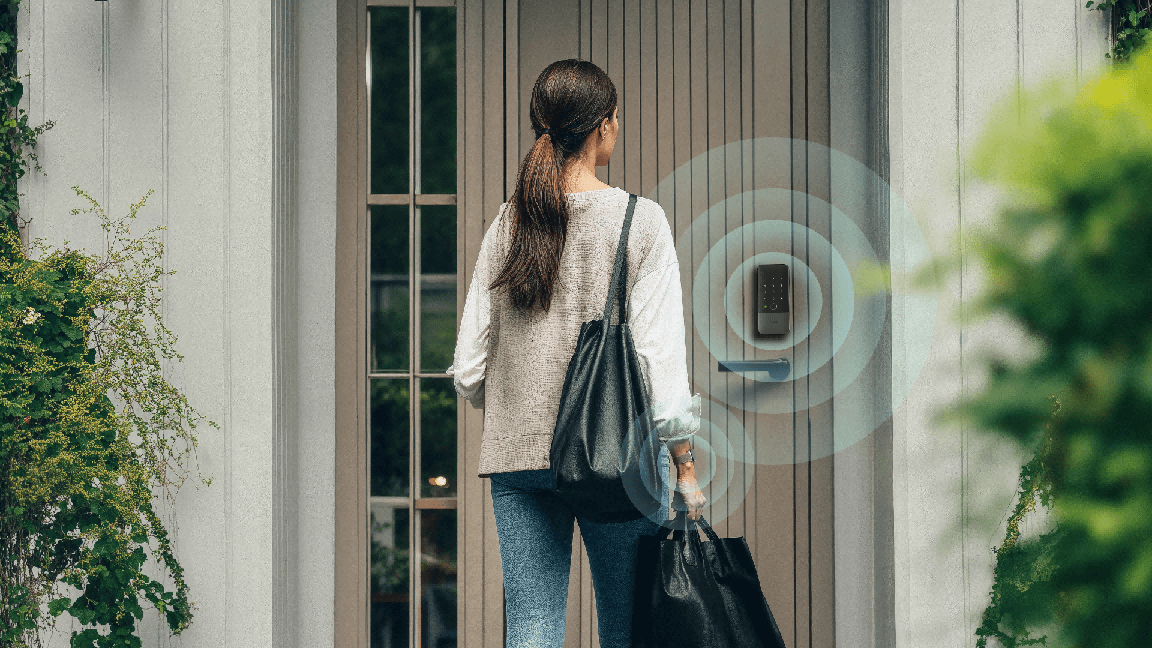
UWB support in smart home products is still limited in practice — right now it mostly comes down to a handful of smart locks that actually use the technology, like the Aqara U400. Samsung using UWB for indoor location tracking too suggests the technology will probably take on a bigger role in smart home automation over the coming years — not just for unlocking a door, but for getting your whole home to respond to which room you’re actually in.
What this means for your smart home
Nothing changes in your SmartThings setup for now — spatial AI is a demonstration, not a shipped feature. The idea does line up with a broader shift toward automations that react to where you are, rather than fixed time schedules, similar to what we’re already seeing with protocols like Matter, Thread and Zigbee. We’ll update this once Samsung shares more about an actual SmartThings rollout.
Every Tuesday: the week's most important smart home news, new products and the best deals in your inbox. Free, unsubscribe any time.