

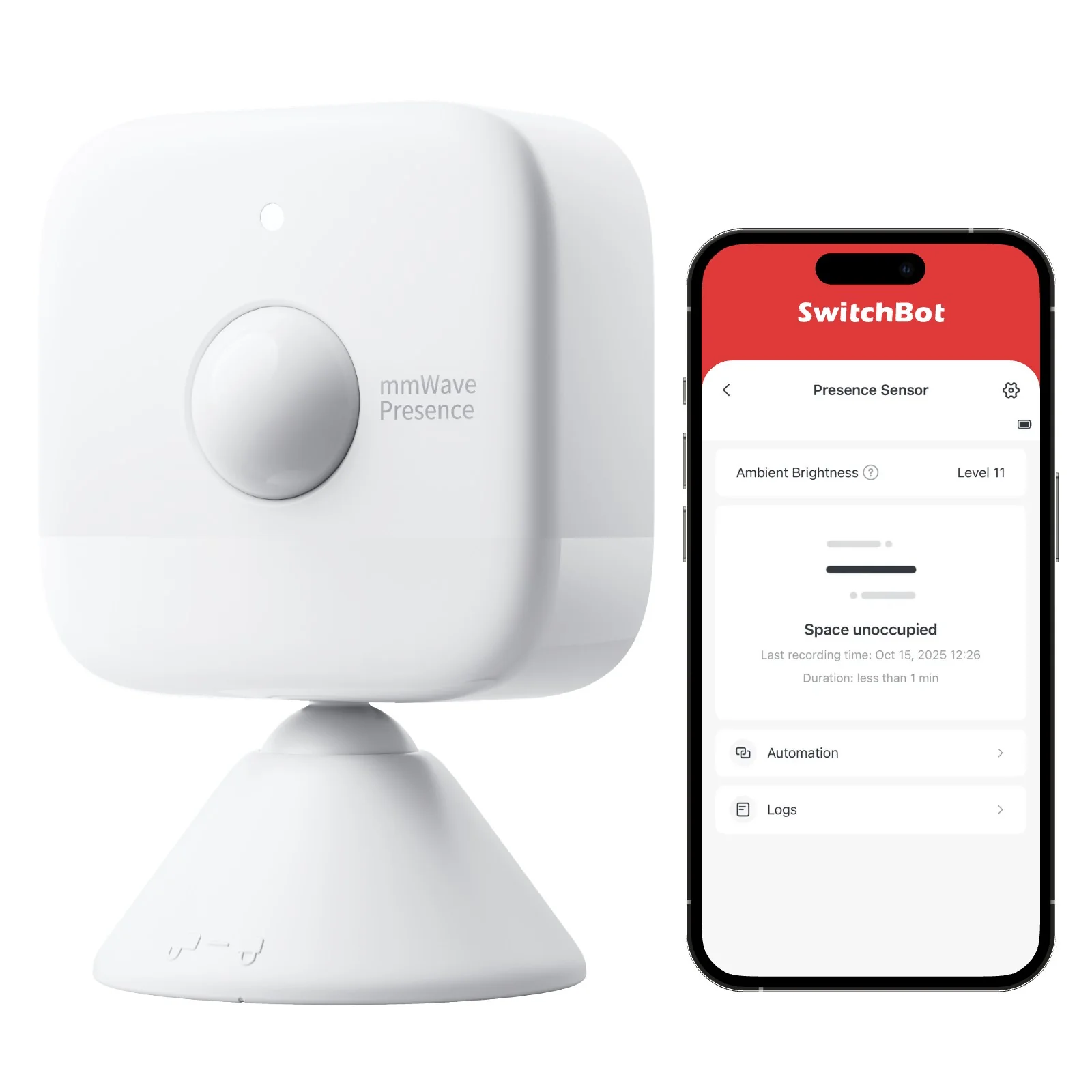
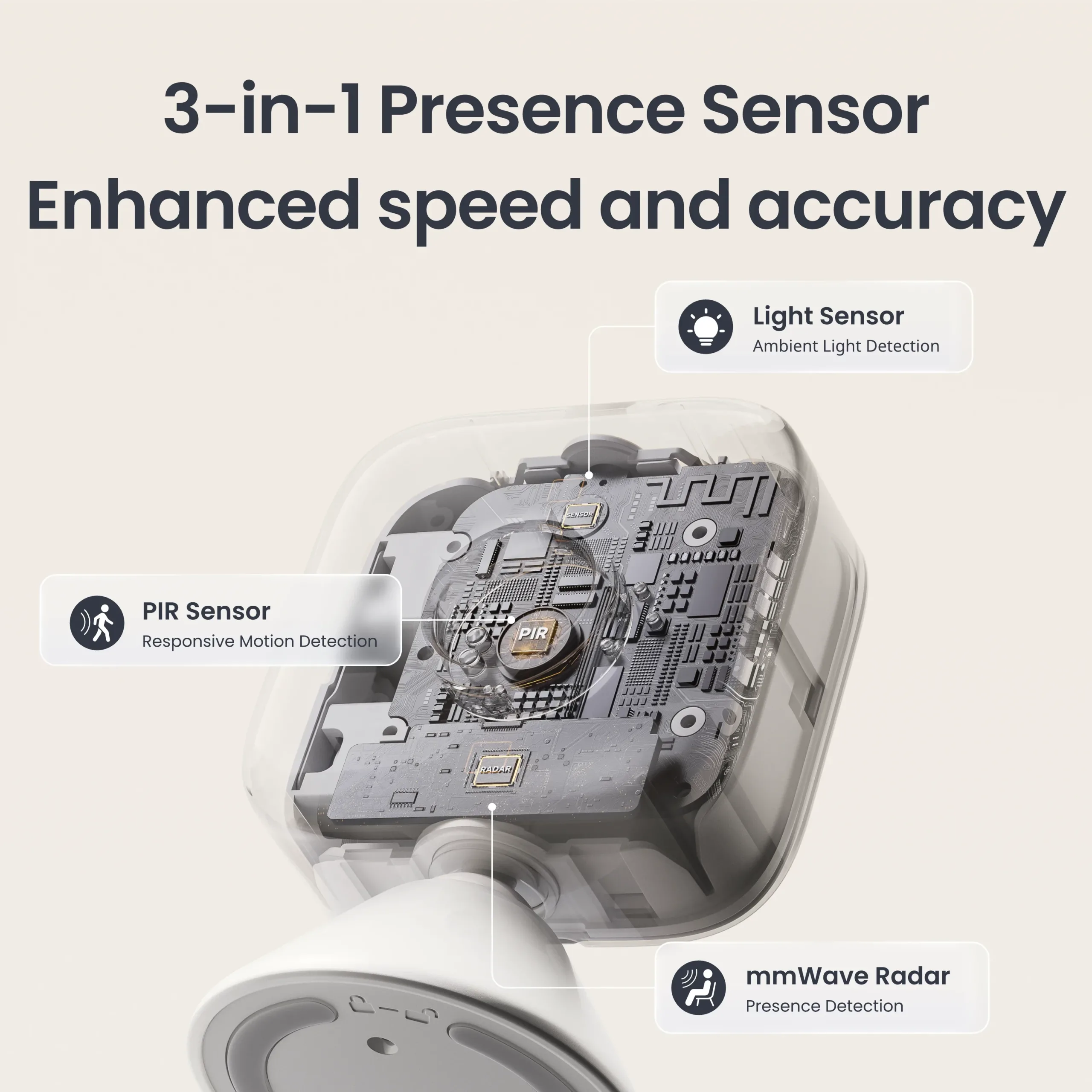
The SwitchBot Presence Sensor combines a traditional PIR motion sensor with mmWave radar. This helps it determine whether someone is actually present in a room, even when that person remains relatively still. It is particularly useful for automations where a normal motion sensor switches the lights off too early. Unlike many mmWave sensors, it runs on batteries and does not need a permanent power cable.
PIR and mmWave work together
PIR is useful for detecting obvious movement when someone enters a room. After you sit down on a sofa or behind a desk, the mmWave radar can continue detecting much smaller movements. According to SwitchBot, it can register subtle movement such as a person breathing. The specified maximum range is eight metres for moving people and five metres for stationary people, with a 120-degree detection angle.
Automatic lighting is the most obvious use. With an ordinary motion sensor, you often need to configure a long delay before switching the lights off. Otherwise, the lights can suddenly go dark while you are reading, watching television or working at a desk. Presence detection allows the automation to keep the lights on while the room is occupied and switch them off only after the person has left. The same principle can control heating, air conditioning or an air purifier.
Battery power makes placement easier
SwitchBot claims a battery life of up to two years, although the actual result will depend on detection settings and activity. Without a USB cable, you can position the sensor where its detection works best rather than where a socket happens to be available. Its magnetic base also makes it easier to aim the sensor.
A built-in light sensor allows automations to account for daylight. For example, the lights can remain off when the room is already bright enough. SwitchBot also includes a learning function intended to recognise interference from devices such as fans and air conditioners. This should reduce false presence reports, which can otherwise be a weakness of sensitive mmWave radar.
Matter support requires a SwitchBot Hub
The sensor connects through Bluetooth. To expose its presence status to another smart home platform, you need a compatible SwitchBot Hub that can act as a Matter bridge. The status can then be shared with platforms such as Apple Home. If you already use a SwitchBot Hub, the sensor can become part of your existing cross-platform automations without running another cable.
SwitchBot Presence Sensor vs Aqara FP300 and FP2
A direct competitor is the Aqara FP300 Presence Sensor. It also combines PIR with 60GHz mmWave and runs on batteries. The FP300 adds temperature and humidity measurements and supports both Zigbee and Thread. Through Matter over Thread, it can connect directly to a suitable Matter controller, while SwitchBot requires one of its hubs for a Matter bridge.
The Aqara Presence Sensor FP2 is a more advanced wired alternative. It can divide a room into as many as 30 zones and track multiple people at the same time. A sofa, dining table and desk can therefore trigger different automations. The SwitchBot sensor does not offer this kind of zoning: it is primarily designed to determine whether anyone is present within its detection area.
The advantage is flexibility. A battery-powered sensor is much easier to install in a hallway, bathroom, toilet or home office. The FP2 is better suited to rooms where zones and multi-person tracking matter, while the FP300 offers more environmental sensors and a direct Thread option.
Conclusion
The SwitchBot Presence Sensor is an interesting choice when you want straightforward wireless occupancy detection. PIR provides quick motion detection, while mmWave keeps recognising a person who is sitting still. The battery gives you considerably more freedom of placement than a wired mmWave sensor. If you already own a SwitchBot Hub, it is also easy to use the presence status in Matter-compatible platforms.
Every Tuesday: the week's most important smart home news, new products and the best deals in your inbox. Free, unsubscribe any time.